Why Smaller Sized Senior Care Residences Excel in Memory and Dementia Care
Business Name: BeeHive Homes of Maple Grove
Address: 14901 Weaver Lake Rd, Maple Grove, MN 55311
Phone: (763) 310-8111
BeeHive Homes of Maple Grove
BeeHive Homes at Maple Grove is not a facility, it is a HOME where friends and family are welcome anytime! We are locally owned and operated, with a leadership team that has been serving older adults for over two decades. Our mission is to provide individualized care and attention to each of the seniors for whom we are entrusted to care. What sets us apart: care team members selected based on their passion to promote wellness, choice and safety; our dedication to know each resident on a personal level; specialized design that caters to people living with dementia. Caring for those with memory loss is ALL we do.
14901 Weaver Lake Rd, Maple Grove, MN 55311
Business Hours
Families normally begin taking a look at senior care alternatives after a crisis: a fall, roaming at night, a fire on the range, or a next-door neighbor calling because Mom is on the deck at 3 a.m. In winter season. They search for assisted living, memory care, respite care, anything that sounds like help. What they often find are big, hotel-like structures with excellent lobbies, long corridors, and activity calendars that look like summer season camp.
Then, nearly as an afterthought, somebody points out a little 6 to ten bed home in a neighborhood close by. No chandelier. No marble reception desk. Just a regular house with a ramp and a doorbell, referred to as a "residential care home" or "board and care."
After twenty years dealing with households and staff in both big neighborhoods and little homes, I have seen the exact same pattern repeat. For individuals dealing with dementia, the smaller setting often supports better every day life, less crises, and calmer families. It is not magic, and it is not best. However the scale of the setting shapes everything from behavior to nutrition.
This is not about offering one model over another. There are excellent big neighborhoods and bad small homes, and vice versa. Instead, it is about comprehending why small senior care homes, when they are well run, are particularly fit to memory and dementia care.
Why size matters more for dementia than for other seniors
Older grownups who are still psychologically sharp can typically adjust to a large assisted living community. They might take pleasure in the busy lobby, the range of activities, and the restaurant-style dining room. Individuals dealing with dementia experience those very same functions extremely differently.
Dementia strips away cognitive reserve and strength. Excessive stimulation is not just exhausting, it can activate agitation, confusion, or withdrawal. A sprawling structure becomes a maze. Multiple personnel teams, turning schedules, and continuous new faces can seem like living in a hotel where the personnel changes every few days.
A smaller sized senior care home naturally lowers that cognitive load. Homeowners see the exact same handful of people every day, both personnel and neighbors. They move within familiar, repeatable courses: bed room to cooking area, cooking area to living room, living space to garden. Their world diminishes, but in such a way that feels workable, not institutional.
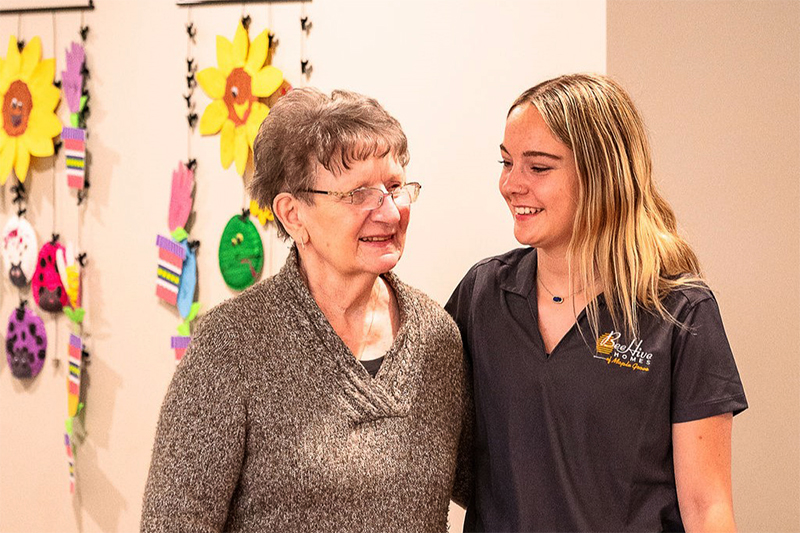
When households tell me, "Mom is a lot calmer because she relocated to the little home," the modification normally reflects three elements that are hard to replicate in a big building:
- Fewer people and less noise.
- Shorter ranges and easier layouts.
- More consistent personnel who understand each resident deeply.
Those might seem like small information. In dementia care, they are the environment.
The sensory experience of a smaller home
You find out a lot about a memory care setting with your eyes closed. Households visiting a place typically gaze at the lobby, the furnishings, or the schedule on the wall. I pay attention to sound, smell, and rhythm.
In a smaller sized home, the sensory environment tends to be closer to regular life. You hear someone slicing veggies, a cleaning machine running, a radio with soft music, perhaps a television in the background. You smell coffee, soup, or toast. Corridors are brief or nonexistent. The dining location is a table that seats everyone.
For a resident with dementia, this lines up with years of routine. Home has always seemed like someone in the cooking area. Mealtime has actually always been around a table, not at a four-top in a space that seats 50 individuals with clattering meals and shouted conversations. The brain does not require to re-learn how to translate that environment. It currently comprehends it.
Large memory care units try to soften the institutional feel, and numerous do a great task. But the sheer scale works against them. Thirty citizens indicate thirty sets of visitors, thirty televisions, thirty bathroom doors opening and closing. Even with outstanding design, there is a hidden level of stimulation that never ever completely disappears.
People with dementia are extremely conscious this background sound. I as soon as worked with a gentleman who ended up being progressively aggressive at 4 p.m. Every day in a 40-bed memory care system. Personnel assumed it was "sundowning." When we sat with him in the typical area and just listened, we discovered a pattern. At that time, staff from the next shift gathered at the nurses' station, households arrived to visit, and supper preparations started. The area went from moderate to disorderly in about 10 minutes. We trialed moving him to a quieter corner and shifting his routine slightly so he remained in his space throughout that shift. His "sundowning" nearly disappeared.
In a small home, those ecological spikes are less significant. Life still has hectic minutes, however the scale softens the edges. For memory and dementia care, that matters immensely.
Relationships, not rotations
Staffing structure is where small homes often shine one of the most. In big assisted living and memory care buildings, staff operate in shifts, often designated to dozens of homeowners per team. Over night, that ratio often becomes one caretaker for fifteen to twenty locals, or more. With turnover, company staff, and schedule modifications, a single resident might see dozens of various caretakers in a month.
In a six to twelve resident home, the picture changes. Personnel still work shifts, however the number of individuals included is much smaller sized. A resident may interact frequently with 6 to 8 caretakers in overall, typically consisting of the supervisor or owner. Gradually, that group builds a very detailed understanding of how each person eats, relocations, sleeps, and reacts.
Continuity is not just about psychological convenience, though that matters. It has genuine scientific effect. Early changes in dementia signs are subtle. Appetite dips for a number of days. A normally talkative resident grows quiet. Somebody who has actually always strolled unassisted starts keeping furniture. Staff who really understand each resident catch these shifts much faster than anyone.
I keep in mind a little home where a caretaker pulled me aside and said, "Mrs. K has actually been folding towels for years. She constantly ends up the stack. Yesterday she left half and wandered away twice. Something is off." That triggered a medical examination. We found a urinary tract infection early, before it intensified into delirium, falls, or a hospitalization. In a bigger setting, where personnel serve many more citizens and tasks are tightly set up, that type of pattern acknowledgment is much harder.
It also impacts how responsive the setting can be to psychological needs. A resident who wakes fearful at night may need 10 minutes of peace of mind and a cup of tea. In a little home with four residents and a single caretaker, that discussion is reasonable. In a memory care system where the over night caregiver is responsible for twenty citizens and three are currently calling out, it is typically impossible, no matter how devoted the staff.
Everyday life feels more like life, not a program
Many large senior care communities put considerable effort into activity programming. There are calendars, style days, entertainers, and group classes. Some homeowners delight in these, and families like to see a full schedule posted. The difficulty is that dementia typically decreases an individual's ability to initiate, strategy, and sustain attention. Being accompanied to a structured event in a room down the hall can feel like being processed through a program instead of living a day.
Smaller homes generally have simpler calendars and rely more on the rhythms of family life. Folding laundry, snapping beans, setting the table, or watering plants become "activities." They are smaller jobs, but they line up with how life has constantly worked. The person with dementia is not a passive recipient of home entertainment. They participate in the household.
This type of engagement take advantage of procedural memory, which is frequently preserved longer than short-term memory. A lady who can not remember what she had for breakfast might still keep in mind, with her hands, how to clean a table or sort socks. Offering her that function is not busywork. It supports self-respect and identity.
I have actually seen guys who invested their entire professions in trades totally withdraw in a large assisted living building, then end up being animated once again in a small home when provided safe, monitored "jobs" like inspecting the fence gate, bring light parcels in from the front door, or assisting organize chairs before lunch. The setting made those roles possible since everything was better, easier, and less constrained by institutional rules.
Safety, wandering, and exits
Families selecting dementia care typically focus heavily on security. They think of locked doors, call bells, alarms, and video cameras. Those features do matter, especially when someone is at danger of wandering into traffic or leaving the structure unsupervised.
Large memory care units typically react with layers of security: coded doors, fenced courtyards, and sometimes several internal doors between a resident's room and the outside. This can minimize danger, but it also increases the sensation of being trapped. For some citizens, that triggers more agitation and more efforts to leave.
Smaller residential homes often utilize a different balance. The building itself is compact, so staff can see or hear nearly everything. Doors may still have alarms or keypads, but there are fewer locations to hide, less blind corners, and often a single primary exit. Staff are not half a structure away when someone tries to open a door.
The physical design also enables safer "wander paths." A resident can stroll from living space to cooking area to outdoor patio and back in an easy loop, monitored by a caretaker who is also making lunch or tidying. That sort of movement is healthy and reassuring. Continuously rerouting an individual to "sit down and stay here" due to the fact that the environment can not securely accommodate walking generally intensifies behaviors.
Of course, not every small home is well developed. I have actually seen narrow hallways with mess, high actions, and back doors that lead to unfenced backyards. Regulation varies by state or province, and not all homes fulfill the very same requirements. Families require to visit and observe layout and safety measures, not presume that small instantly indicates safe. However when done well, the small footprint offers both security and freedom of motion in ways large buildings struggle to match.
Medical care, crises, and higher acuity
There is a fair issue families raise about small homes: what takes place when care needs boost? Large assisted living or memory care communities frequently have on-site nurses, visiting doctors, and therapy services. They might senior living near me advertise "aging in location" with the capability to handle injections, feeding tubes, or two-person transfers.
Smaller homes differ extensively. Some focus mostly on lower to moderate needs. Others are accredited and staffed to deal with complex dementia care and even hospice-level assistance. I have actually worked with six-bed homes that effectively supported locals through the last months of life without hospitalization, using hospice groups and strong caretaker training.
The secret is to look beyond the label. "Assisted living" and "memory care" are marketing terms as much as legal classifications, and the specific assisted living license or residential care license in your region determines what is allowed. Households ought to ask blunt questions:
What is the optimum level of care you can provide?
Can you deal with transfers for someone who can not stand? Do you have nurses on staff or on call? How frequently do locals go to the medical facility, and who decides?Smaller homes seldom have doctors on site, but lots of establish close relationships with regional medical groups, nurse professionals, or home health companies. Those partnerships can be nimble. I have actually seen a nurse professional make a same-day visit to a little home to evaluate an abrupt behavior change, something that would have required an ER trip in another setting.
At the same time, there are limits. If someone requires constant tracking equipment, frequent IV medications, or highly technical care, a small residential setting may not be proper. The strength of little homes is relational, environmental support, and constant observation, not state-of-the-art interventions.
Where smaller sized homes shine, and where larger neighborhoods still help
It assists to be honest about the compromises. There is no ideal model, only much better or even worse matches for a particular individual at a specific point in their dementia journey.
Here are scenarios where, in my experience, a small senior care home is particularly efficient:
- Middle-stage dementia with substantial memory loss, confusion, or wandering danger, however without extremely complicated medical needs.
- Individuals who end up being easily overwhelmed, nervous, or agitated in noisy or congested environments.
- People whose sense of identity is closely tied to home routines, such as cooking, gardening, or "assisting."
- Families who value regular, direct interaction with caretakers and would like to know who is with their loved one day to day.
- Residents who have already had a hard time in a big assisted living or memory care setting due to behavioral difficulties or duplicated falls in long hallways.
Larger assisted living or memory care neighborhoods, on the other hand, can be a much better fit when somebody is still socially oriented, delights in variety, and can browse larger areas with very little distress. They may also be more effective when a resident has numerous complex medical conditions that need on-site clinical oversight, or when a family anticipates a requirement to shift in between independent living, assisted living, and skilled nursing within one campus.
Cost can also press decisions. In some areas, small homes are more economical than large communities. In others, shop residential homes charge a premium. Each model has its staffing and overhead structures, and prices reflects that.
What to search for when exploring a little memory care home
Families typically feel unprepared when they step into a small senior care home for the very first time. It does not look like the sales brochures for assisted living. To keep visits grounded, a basic list helps.
When you tour, pay specific attention to:
- Atmosphere: Do residents look relaxed, tidy, and participated in something, even if it is easy? How does the home feel in your gut after 10 minutes?
- Staff interaction: Do personnel speak with residents respectfully, at eye level, using names? Listen for tone as much as words.
- Cleanliness and safety: Is the home clean without giving off harsh chemicals or urine? Are floors clear, bathrooms available, and exits protected yet not prison-like?
- Daily life: Ask how a common day unfolds, from waking to bedtime. Does it sound flexible, or stiff and staff-centered?
- Communication: How will the home keep you updated? Who calls you with changes, and how often?
Use your own senses more than pamphlets or sites. A place that fits your loved one's personality and history is more vital than the newest furniture or the most sleek marketing.
Respite care: testing the fit without a long-lasting commitment
Short-term respite care can be an effective method to check a smaller sized home without completely moving your loved one. Lots of residential homes offer respite care slots for one to 4 weeks when space allows. Families typically utilize these throughout caregiver vacations or medical treatments, but they are equally beneficial as trial runs.
I have actually seen families use a two-week respite remain in a small home for a parent who was declining in your home however refused the idea of "going to a facility." Framing it as "staying with some individuals who can assist while you get more powerful" reduced resistance. When the parent settled surprisingly well, the discussion about a fuller transition became simpler and more truthful. The household was not guessing about fit. They had evidence.
From a staff viewpoint, respite remains let the team find out an individual's practices, activates, and strengths before a crisis forces an urgent admission. That understanding settles if the person returns long term, particularly when dementia is involved. Little homes usually remember their respite visitors; the familiarity cuts both ways.
Not every little home offers respite care, due to the fact that holding a bed empty has monetary repercussions. When you call, inquire about minimum and maximum stay lengths, daily rates, and what is included. For many families, the cost of a short stay is small compared to the insight it provides.
Matching personality and history to setting
One of the most significant mistakes I see is selecting a senior care setting based upon amenities rather than alignment with the person's character and life story. A retired teacher who invested 35 years in bustling classrooms might delight in a busier environment longer than a peaceful introvert who gardened and read for decades. A previous nurse may feel more secure understanding there is a nurse's station down the hall. Someone who lived in towns and close-knit areas might feel swallowed by a multi-story building.
Smaller homes often resonate with individuals who:
- Equate "home" with a cooking area table, a familiar couch, and neighbors who discover when something is off.
- Prefer a handful of strong relationships over constant new faces.
- Have movement concerns that make long corridors or big dining-room exhausting.
At the very same time, some individuals feel caught or bored in a small setting, particularly early in a dementia diagnosis when they still acknowledge the decrease in options. For them, a larger assisted living or memory care neighborhood, perhaps with strong wayfinding supports and peaceful zones, may be better for a time, with the alternative to shift later.
The match is not static. Dementia is a moving target. The "right" setting at the mild cognitive disability phase may be incorrect at mid-stage, and the best end-of-life environment might be yet another shift. Families who accept that there might be more than one relocation over numerous years feel less guilt and more clearness when a change ends up being necessary.
Working with staff as partners, not simply providers
Regardless of setting size, the quality of dementia care hinges on relationships in between families and staff. Little homes tend to make those relationships visible due to the fact that the scale is human. You see the very same faces, share the very same kitchen, and have a direct line to individuals doing the work.
When households treat personnel as partners, not just provider, results improve. That does not indicate neglecting problems. It means sharing history, preferences, and fears freely, and listening seriously when caretakers share observations. The caretaker who notices that Dad consumes better with finger foods, or that Mom is calmer if she folds towels after lunch, may not have actually advanced degrees. They do have hours of lived observation that can assist better care.
I typically motivate families to visit at different times, consisting of late afternoon and early evening, not simply mid-morning when every place looks its finest. In a small home, you can see how one caretaker manages dinner, medications, and rerouting a resident who is figured out to "go catch the bus." Watching that dance tells you much more about the quality of dementia care than any brochure.
Final thoughts: small scale, big impact
Dementia care sits at the crossway of medical requirement and human environment. People do not stop being who they are when memory fades. They still respond to space, noise, light, regular, and relationship. The size and structure of a care setting magnify or soften those components every hour of the day.
Small senior care homes are not a universal response. They differ enormously in quality, staffing, and approach. However when they are well run, their modest scale aligns naturally with the requirements of individuals coping with dementia: fewer faces to keep in mind, much shorter paths to navigate, familiar home activities, and personnel who know each resident as an individual, not a room number.
Whether you are preparing for long-term memory care, exploring assisted living, or organizing brief respite care, it deserves taking small homes seriously as an option, not an afterthought. Tour them with your eyes, ears, and impulses engaged. Ask tough questions about staffing, safety, and medical support. Photo your loved one moving through that area on a restless Tuesday afternoon, not just sitting nicely on admission day.
If the setting feels like a real home where dementia can be lived, not merely saved, you might have discovered the right scale for the next chapter of care.
BeeHive Homes of Maple Grove provides assisted living care
BeeHive Homes of Maple Grove provides memory care services
BeeHive Homes of Maple Grove is a memory care home for seniors
BeeHive Homes of Maple Grove provides respite care services
BeeHive Homes of Maple Grove offers 24-hour support from professional caregivers
BeeHive Homes of Maple Grove offers private bedrooms with private bathrooms
BeeHive Homes of Maple Grove provides medication monitoring and documentation
BeeHive Homes of Maple Grove serves dietitian-approved meals
BeeHive Homes of Maple Grove provides housekeeping services
BeeHive Homes of Maple Grove provides laundry services
BeeHive Homes of Maple Grove offers community dining and social engagement activities
BeeHive Homes of Maple Grove features life enrichment activities
BeeHive Homes of Maple Grove supports personal care assistance during meals and daily routines
BeeHive Homes of Maple Grove promotes frequent physical and mental exercise opportunities
BeeHive Homes of Maple Grove provides a home-like residential environment
BeeHive Homes of Maple Grove creates customized care plans as residents’ needs change
BeeHive Homes of Maple Grove assesses individual resident care needs
BeeHive Homes of Maple Grove accepts private pay and long-term care insurance
BeeHive Homes of Maple Grove assists qualified veterans with Aid and Attendance benefits
BeeHive Homes of Maple Grove encourages meaningful resident-to-staff relationships
BeeHive Homes of Maple Grove delivers compassionate, attentive senior care focused on dignity and comfort
BeeHive Homes of Maple Grove has a phone number of (763) 310-8111
BeeHive Homes of Maple Grove has an address of 14901 Weaver Lake Rd, Maple Grove, MN 55311
BeeHive Homes of Maple Grove has a website https://beehivehomes.com/locations/maple-grove/
BeeHive Homes of Maple Grove has Google Maps listing https://maps.app.goo.gl/n99VhHgdH879gqTH8
BeeHive Homes of Maple Grove has Facebook page https://www.facebook.com/BeeHiveMapleGrove
BeeHive Homes of Maple Grove won Top Memory Care Homes 2025
BeeHive Homes of Maple Grove earned Best Customer Service Award 2024
BeeHive Homes of Maple Grove placed 1st for Senior Living Memory Care Communities 2025
People Also Ask about BeeHive Homes of Maple Grove
What is the monthly room rate at BeeHive Homes of Maple Grove?
The monthly rate depends on each resident’s care needs, room selection, and personalized care plan. Before move-in, we complete an initial assessment to better understand your loved one’s health, safety, mobility, personal care, and memory care needs. From there, we provide clear pricing based on the level of support required. Our goal is to keep families informed with transparent pricing and no hidden fees.
Does BeeHive Homes of Maple Grove only offer Memory Care?
BeeHive Homes of Maple Grove offers enhanced assisted living with specialized memory care support. We are experienced in caring for seniors living with Alzheimer’s, dementia, and other forms of memory loss, while also welcoming residents who may not have a dementia diagnosis but would benefit from a secure, highly personalized care environment. Our homelike setting is especially helpful for seniors who are earlier in their dementia journey, as well as those who need extra structure, daily support, meaningful routines, and compassionate oversight. Each resident receives care tailored to their needs, helping them feel safe, supported, and truly at home.
Can residents stay at BeeHive Homes through the end of life?
In many cases, yes. Our goal is to help residents remain in a familiar, comforting environment for as long as we can safely meet their needs. There may be exceptions if a resident requires 24-hour skilled nursing services or has needs that cannot be safely supported in our memory care setting. When care needs change, our team works closely with families, physicians, hospice providers, and other care professionals to help make the next step as smooth and compassionate as possible.
Do you have nurses on staff?
Yes. BeeHive Homes of Maple Grove has a team of Registered Nurses who provide care oversight, assessments, care planning, and coordination with other healthcare professionals. The typical RN schedule is Monday through Friday from 7:00 AM to 6:00 PM and weekends from 9:00 AM to 5:30 PM, with a Registered Nurse on call after hours. This helps families feel confident that their loved one’s changing memory care needs are being monitored with attention and compassion.
What are the visiting hours at BeeHive Homes of Maple Grove?
Family and friends are welcome to visit anytime. Because routine is especially important for residents with memory loss, we encourage visitors to avoid scheduled meal times when possible: 8:00 AM, 11:30 AM, and 4:30 PM. Visits are an important part of helping residents feel connected, loved, and at home.
Are the rooms private?
Yes. Residents enjoy private memory care suites with fully accessible bathrooms. Families are encouraged to personalize the room with familiar furniture, photos, keepsakes, and comforting touches that help the space feel like their loved one’s own. BeeHive Homes of Maple Grove also offers accommodations for couples who wish to remain together, depending on availability./p>
How do I schedule a tour or learn more?
You can call BeeHive Homes of Maple Grove at 763-310-8111 to ask questions, discuss availability, or schedule a personal tour. Visiting in person is one of the best ways to experience the warmth of the home, meet the care team, and see whether BeeHive Homes is the right fit for your loved one.
What makes BeeHive Homes of Maple Grove different from larger memory care communities?
BeeHive Homes of Maple Grove offers memory care in a smaller, more personal residential setting. Residents are known by name, supported according to their individual routines, and cared for in a warm environment that feels like home. From private suites and home-cooked meals to life enrichment activities and secure spaces, our approach is centered on comfort, dignity, and meaningful connection.
Where is BeeHive Homes of Maple Grove located?
BeeHive Homes of Maple Grove is conveniently located at 14901 Weaver Lake Rd, Maple Grove, MN 55311. You can easily find directions on Google Maps or call at (763) 310-8111 Monday through Sunday 7am to 7pm.
How can I contact BeeHive Homes of Maple Grove?
You can contact BeeHive Homes of Maple Grove by phone at: (763) 310-8111, visit their website at https://beehivehomes.com/locations/maple-grove, or connect on social media via Facebook
Visiting the Elm Creek Park Reserve provides a big outdoor environment for assisted living, memory care, senior care, and elderly care residents to explore nature on a peaceful respite care trip.
Ends · TYSONKICE360